Jowar vs Ragi: Which Millet Is Right for Your Family?
Walk down any health-food aisle in India right now and two grains keep showing up on the front of the pack: jowar and ragi. Both are millets, both are gluten-free, and both were staples in Indian kitchens long before they became label heroes. So when a parent stands in the store trying to pick one for the family, the honest question is whether they are interchangeable, or whether each does something the other cannot.
The short answer is that jowar and ragi are teammates, not rivals. They suit slightly different people, meals and moods. This guide breaks down how they compare on nutrition, taste and everyday use, then helps you match each millet to the person reaching for the snack box, whether that is a growing child, a woman watching her calcium, or someone keeping an eye on blood sugar.
- Meet jowar and ragi
- Nutrition, head to head
- Jowar: the light everyday millet
- Ragi: the calcium powerhouse
- Which millet for which family member
- Taste, texture and everyday use
- So, jowar or ragi?
Meet jowar and ragi
Jowar (sorghum) is a pale, round grain with a mild, almost neutral flavour. Ragi (finger millet) is a tiny reddish-brown grain with an earthy, nutty taste. Both are naturally gluten-free whole grains, rich in fibre, and slower to digest than refined wheat or rice. The FAO named 2023 the International Year of Millets partly because grains like these carry more nutrition per bite than the refined staples that pushed them off our plates.
Nutrition, head to head
| Jowar (sorghum) | Ragi (finger millet) | |
|---|---|---|
| Taste | Mild, neutral | Earthy, nutty |
| Standout nutrient | Antioxidants, iron | Calcium (very high) |
| Fibre | High | High |
| Best known for | Light everyday grain, weight-friendly | Bone health, kids, growth |
| Gluten | Gluten-free | Gluten-free |
Ragi is one of the richest plant sources of calcium, several times more than most cereals, which is its headline strength. Jowar is lighter and lower in calcium, but rich in antioxidants, iron and B vitamins. Both carry enough fibre to slow digestion and steady energy. The ICMR-National Institute of Nutrition encourages Indians to bring millets back into everyday cereal intake for exactly this fibre-and-micronutrient reason.
Jowar: the light, everyday millet
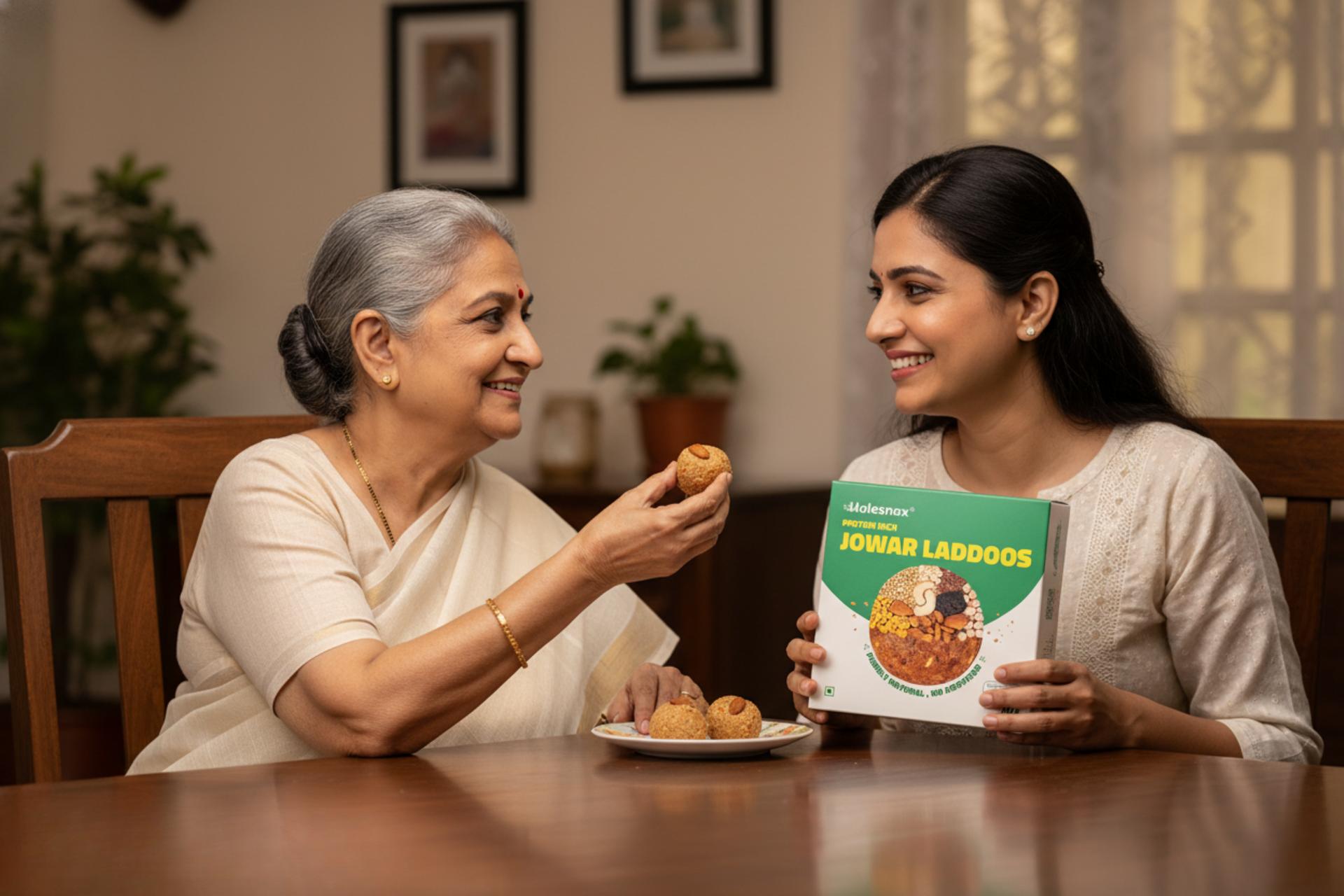
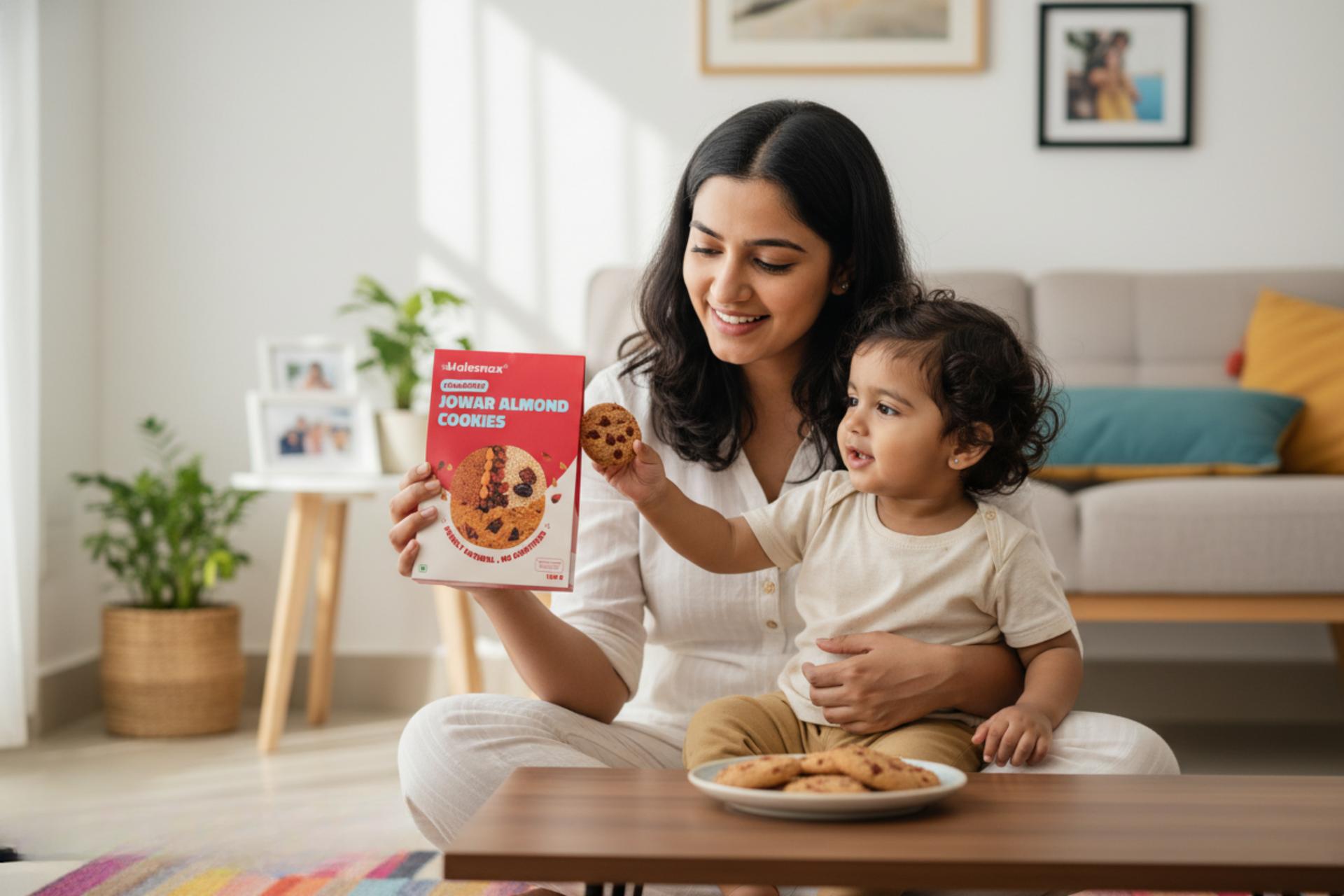
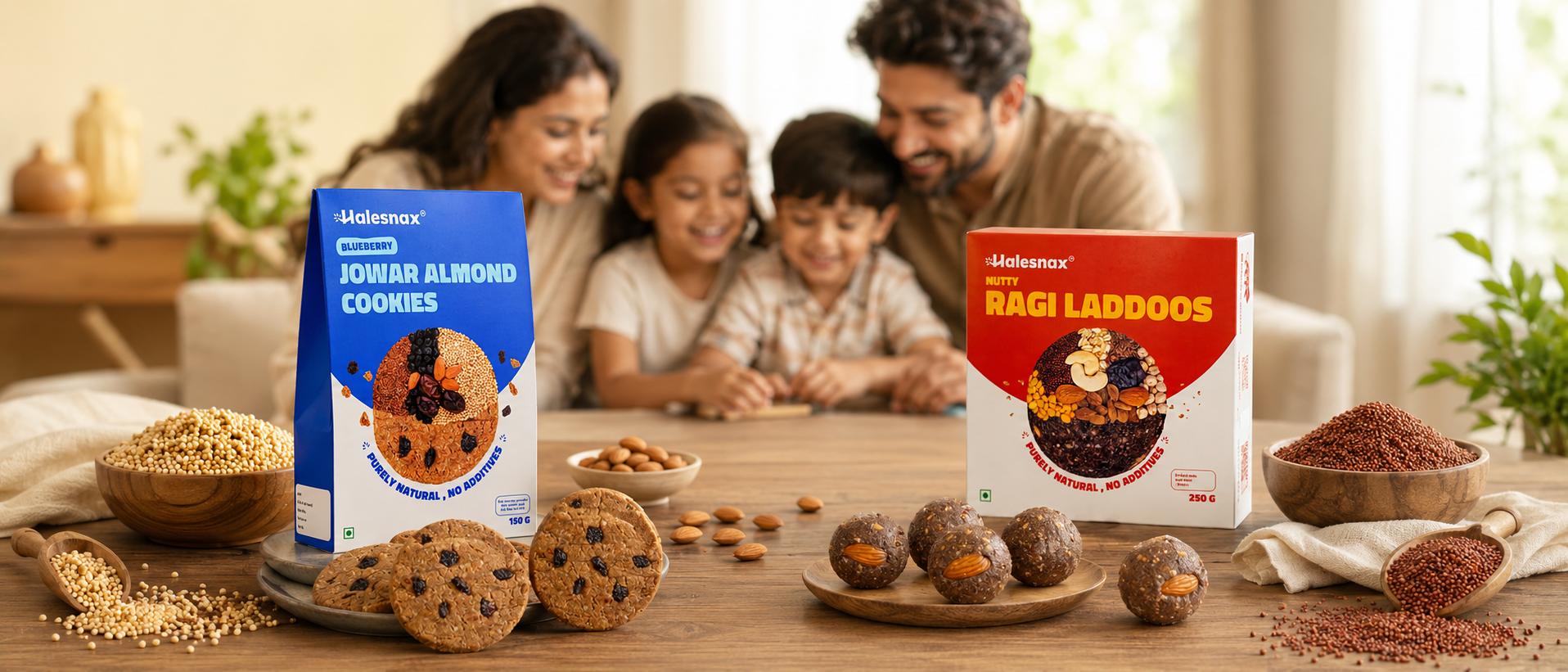
Jowar's mild taste is its superpower. It slips into cookies, rotis and snacks without shouting, which makes it the easy pick for fussy eaters and children who wrinkle their noses at anything labelled healthy. It sits light on the stomach, keeps you full without heaviness, and its fibre supports the slow energy release that keeps the 4 pm slump away. For families stepping off maida for the first time, jowar is the gentlest bridge. Our jowar cookies, for instance, swap refined flour for whole jowar while still tasting like a proper chai-time biscuit.
Ragi: the calcium powerhouse
If jowar is the diplomat, ragi is the specialist. Its claim to fame is calcium: gram for gram, few plant foods match it, which is why generations of Indian mothers started babies on ragi porridge and why it stays a favourite for growing kids, pregnant and breastfeeding women, and older adults protecting bone density. Ragi also brings iron and useful amino acids, and its slow-digesting starch makes it a friend to anyone watching blood sugar. The trade-off is flavour: ragi is earthier and more assertive, which some people love straight away and others grow into.
Which millet for which family member
For kids
Ragi first, for the calcium and iron that growing bones and busy brains need. If your child resists the earthy taste, start with milder jowar snacks and blend ragi in gradually.
For women
Ragi earns its place for calcium and iron, especially valuable through pregnancy, breastfeeding and the post-menopausal years when bone density needs support.
For diabetics and weight watchers
Both work. Jowar's lightness makes it a comfortable everyday base, while ragi's fibre keeps you full for longer. Either one beats a maida biscuit for blood sugar.
For elders
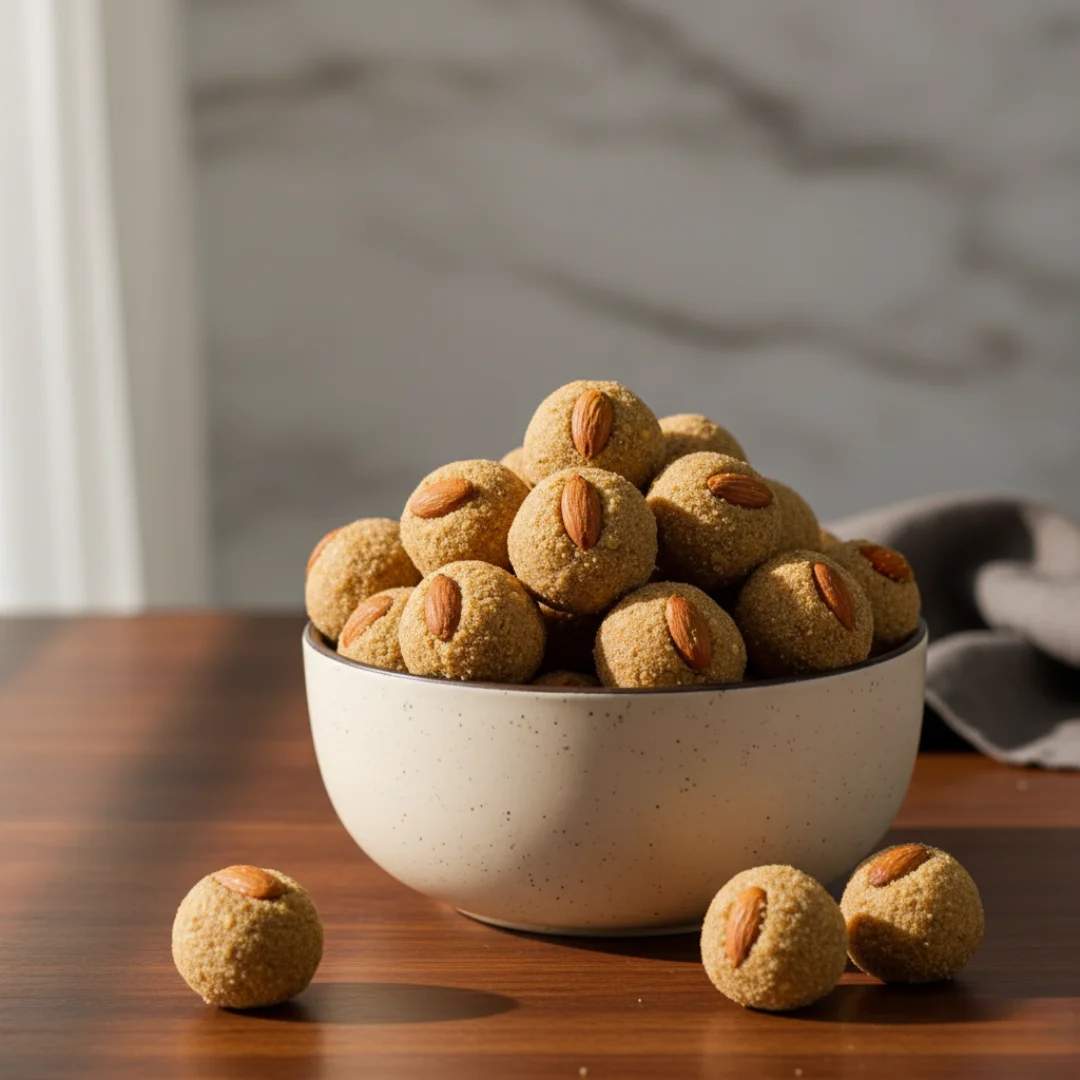
Ragi again, for bones and easy digestibility, ideally in softer forms like porridge, laddoos or lightly baked snacks.
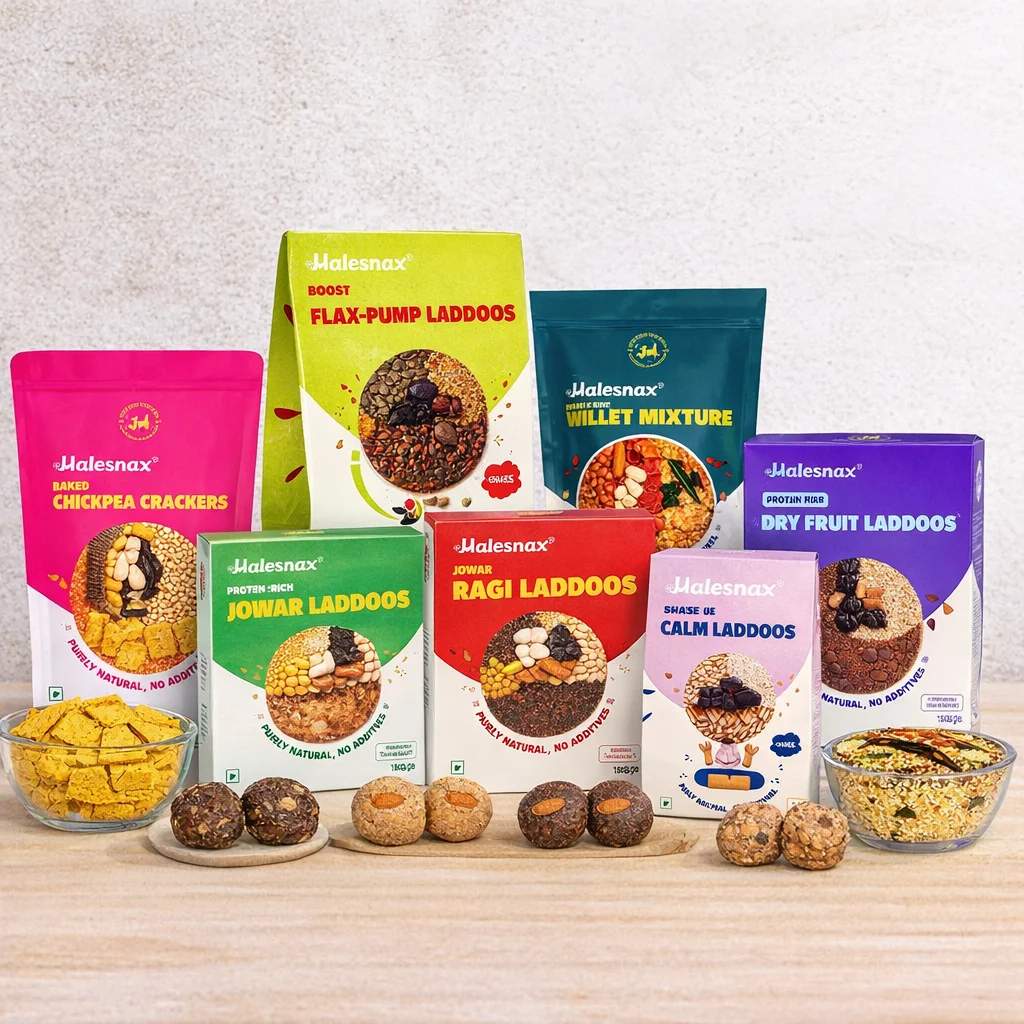
 Laddoos Combo: ragi, jowar and dry fruit laddoos in one box, no refined sugar. See the product
Taste, texture and everyday use
Jowar is the chameleon: mild enough for cookies, crackers, rotis and upma. Ragi is bolder, shining in porridge, dosa, laddoos and darker bakes where its nutty depth is welcome. A practical family strategy is to keep both. Use jowar for the light, anytime snacks that everyone accepts, and ragi for the nutrient-dense bites you want your kids and parents to eat. You do not have to pick a side at the store; you can rotate them through the week.
So, jowar or ragi?
If you need one line: choose ragi when calcium and growth matter most (kids, women, elders), and reach for jowar when you want a light, everyday, easy-to-love grain the whole family will eat without fuss. Most homes are happiest keeping both on the shelf and letting the meal decide. Whichever you pick, you are trading refined flour for a whole grain your grandparents would recognise, and that swap alone is a quiet win.
At Halesnax we build snacks around exactly this thinking: whole millets, clean ingredients, no preservatives, and honest portions the whole family can share. Explore our jowar cookies in the explore cookies collection, our ragi and millet laddoos in the explore laddoos collection, or browse everything gluten-free in shop all. Healthy bites, happy you.
Family-friendly healthy snacking ideas, millet guides, and honest launches from the Halesnax kitchen.
Shop bestsellers